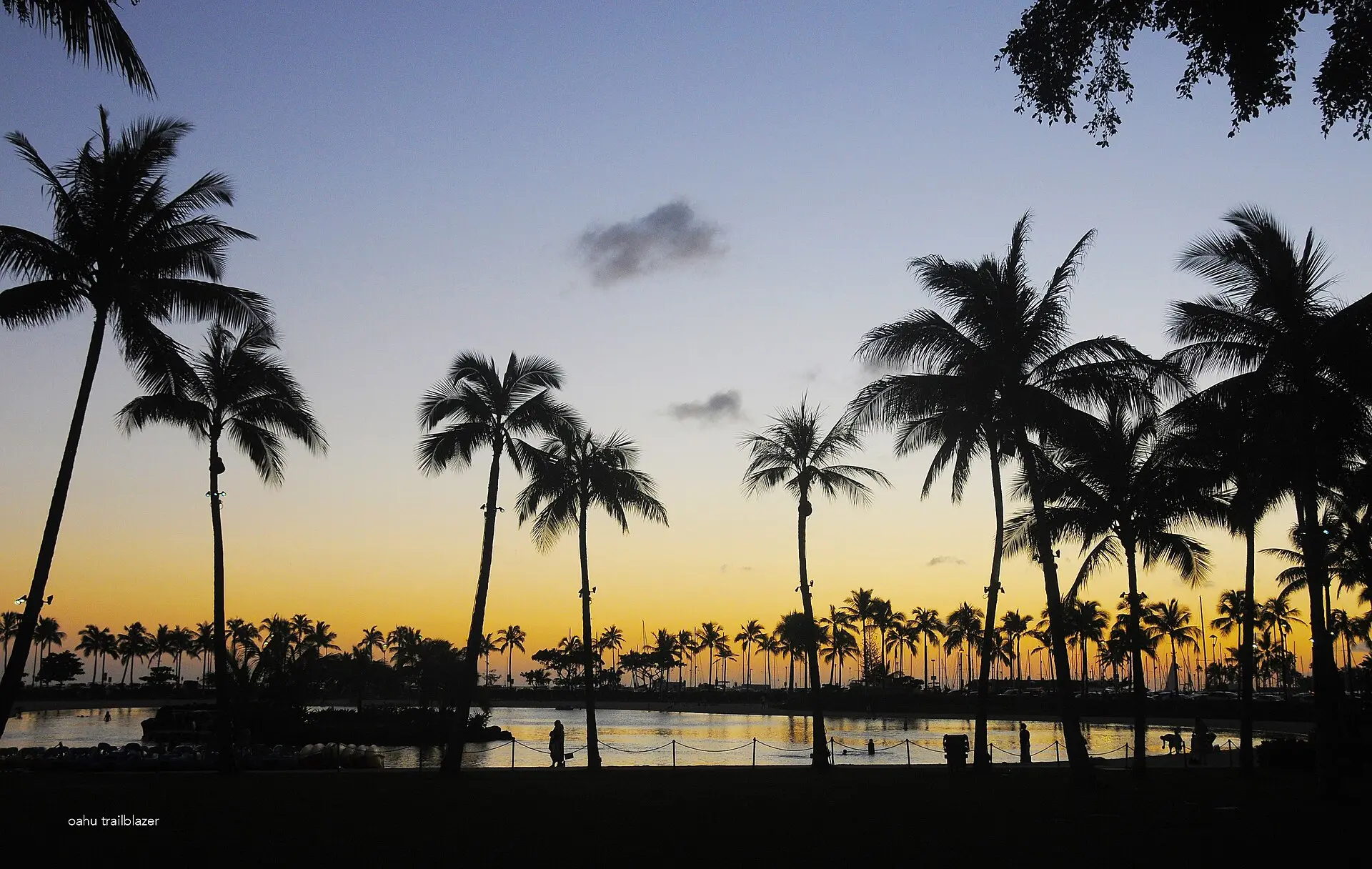
Duke Kahanamoku Beach, canoes, clear water, and western Waikiki hotels
Wide sand and calm water in western Waikiki

Duke Kahanamoku Beach

Choose between a reef-protected ocean beach and an adjacent man-made lagoon, then stay for sunset or Waikiki's Friday fireworks.

Best for calm-water daysBeach plus lagoonFree public accessWestern Waikiki

The spacious Waikiki option

Two water experiences in one stop

Duke Kahanamoku Beach occupies Waikiki's western edge between Ala Wai Small Boat Harbor and the Hilton Hawaiian Village catamaran pier. A shallow offshore reef reduces some wave energy along the beach, while the adjacent Duke Kahanamoku Lagoon provides a separate, enclosed setting with a sandy bottom.

The wide beach, lagoon lawns, palms, nearby resort services, and broad western horizon make this one of Waikiki's easiest locations for families and relaxed beachgoers. Visitors can swim, paddle, walk toward Fort DeRussy, watch boats enter the harbor, or simply choose a quieter piece of sand than the compact central sections.

The names cause confusion. Duke Kahanamoku Beach is the ocean shoreline. Duke Kahanamoku Lagoon, often called Hilton Lagoon, is the man-made body of water immediately inland. Both are accessible to the public, but each has different depth, activity patterns, and safety considerations.

The quick plan

Pick one water area first

Use the lagoon for a more contained experience or the reef-protected ocean beach for sand, horizon, and natural water movement. Check conditions and establish a clear meeting point before anyone enters.

Check Waikiki conditionsBeach warnings, lagoon access, events, surf, and lifeguard availability can change.
AdmissionFree
Typical visit2 to 4 hours
Lifeguard schedule8 a.m. to 6:30 p.m.
Best lightLate afternoon

Make the key choice

Beach or lagoon?

They sit side by side, but they do not offer the same experience. Choose from current conditions and your group's abilities.

Natural shoreline

Duke Kahanamoku Beach

A wide strip of sand facing the Pacific. The shallow reef can soften waves, yet current, shorebreak, marine life, boats, and changing surf remain part of the environment.

  • Best for sand and ocean views
  • More natural water movement
  • Daytime lifeguard coverage is listed
  • Easy shoreline walk toward central Waikiki
Choose when the ocean is calm and your group wants a true beach session.
Man-made water

Duke Kahanamoku Lagoon

A large public-access lagoon with a sandy edge and bottom. It slopes from shallow margins toward a deeper center, so calm appearance does not mean uniform depth.

  • Best for contained recreation
  • Popular with families and paddlers
  • No waves from the open ocean
  • Lawns and resort activity nearby
Choose when containment matters more than an open-ocean setting.
Families floating in the calm water of Duke Kahanamoku Lagoon

Calm does not remove responsibility

Supervise both water areas

The lagoon is shallow at its sandy edges but reaches greater depth toward the center. The ocean beach is reef-protected yet exposed to natural conditions. Neither area should be treated like a private swimming pool.

Choose a visible baseUse a distinctive landmark, keep belongings together, and make sure children know exactly where to return.
Keep young swimmers within reachActive adult supervision is required in the lagoon and ocean, even when flotation devices are used.
Stay clear of boat routesCatamarans, canoes, paddle craft, and harbor traffic operate nearby. Never cross a marked or active vessel path.
Check the ocean separatelyA calm lagoon says nothing about the surf outside. Read beach signs and ask the lifeguard before entering the Pacific.
Official lifeguard information

The western Waikiki advantage

Stay for sunset and fireworks

Duke Kahanamoku Beach opens toward a broad western horizon, making late afternoon one of the best reasons to visit. The low light reaches across the lagoon, silhouettes palms and sailboats, and gives the beach a less enclosed feel than many central hotel-front sections.

The Hilton Hawaiian Village also presents a short Friday-night fireworks show when its current schedule operates. The display is launched offshore near Duke Kahanamoku Beach, placing this area close to the action. Crowds gather before showtime, and temporary safety zones or access patterns may change where visitors can stand.

Check the current Friday fireworks guide before planning a special trip. Arrive early, keep exits and resort paths clear, protect hearing for young children, and never enter dark water to improve the view.

Sunset plan: finish swimming in daylight, rinse off, then move to a dry viewing area before the sky changes.
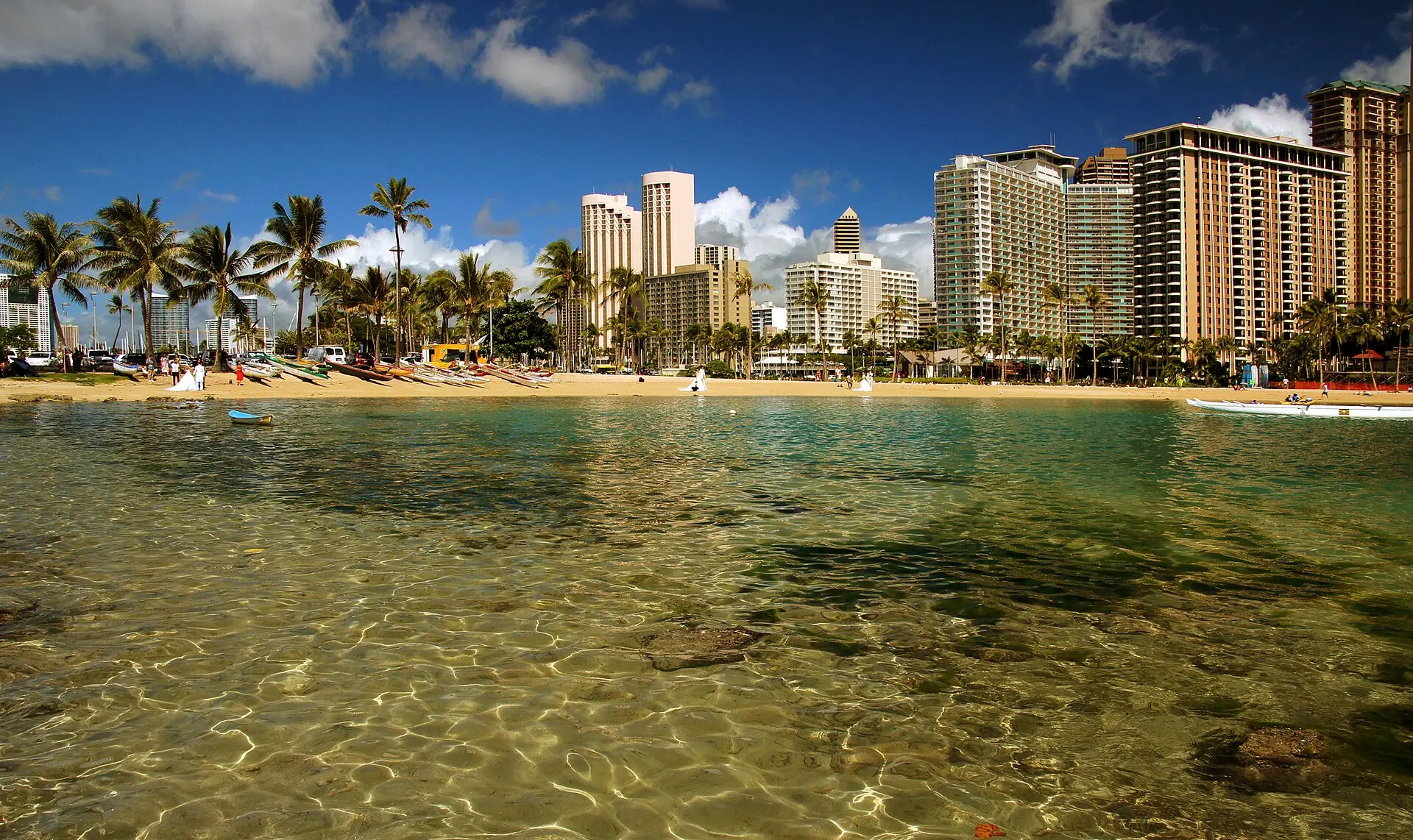
Palm silhouettes and golden evening light at Duke Kahanamoku Lagoon
The lagoon and marina create one of western Waikiki's strongest evening settings.

Practical visitor guide

Plan the details

At a glance

  • LocationWestern Waikiki beside Hilton Hawaiian Village
  • AdmissionFree public access; no reservation required
  • Best forFamilies, calm-water recreation, sunset
  • LifeguardsWaikiki Dukes currently listed daily, 8 a.m. to 6:30 p.m.
  • FacilitiesRestrooms, showers, food and rentals nearby
  • ParkingMostly paid garages and limited public spaces

Know before you go

The lagoon becomes deepIts calm surface and shallow edge can hide the gradual slope toward deeper central water.
The beach is publicResort buildings and services are nearby, but lawful shoreline access is not limited to hotel guests.
Parking adds costWalking, TheBus, or a taxi is often more practical than paying resort rates for a short visit.
Weekend events change the feelFireworks, races, weddings, and resort activities can create crowds or temporary route changes.
Bring:WaterSun protectionTowelsDry layer after sunsetSmall light for the walk back

Exact location

Duke Kahanamoku Beach on Google Maps

Duke Kahanamoku Beach

Western Waikiki between Ala Wai Small Boat Harbor and Hilton Hawaiian Village, near 2005 Kālia Road.

Get directions
From central Waikiki

Walk west

Allow roughly 15 to 30 minutes depending on your hotel. The beachfront route is part of the experience.

By bus

Use Ala Moana Boulevard

Services stop near the western resort area. Confirm the best current stop and walking route.

By car

Expect paid parking

Resort and nearby commercial garages may be available. Check total rates and validation before entering.

Build a relaxed half-day

Use western Waikiki

Morning
Start with the lagoon or beach

Choose from current conditions, identify the staffed lifeguard area, and complete water time before fatigue.

Midday
Walk toward Fort DeRussy

Continue east along the shoreline for a wider look at Waikiki's connected beach sections.

Afternoon
Explore the harbor edge

Watch boats from a safe public viewpoint without entering working docks, ramps, or vessel channels.

Evening
Return for golden hour

Use the lagoon lawn or dry sand for sunset, and stay only if a confirmed Friday fireworks schedule fits your visit.

Quick answers

Duke Kahanamoku Beach FAQ

Is Duke Kahanamoku Beach free?

Yes. The beach and adjacent lagoon normally have free public access with no reservation. Parking, rentals, resort services, food, lessons, and organized activities are separate expenses.

Is the lagoon part of the ocean?

No. Duke Kahanamoku Lagoon is a man-made body of water beside the open-ocean beach. It has a sandy edge and calm surface but slopes toward deeper water in the center.

Which is better for children, the beach or lagoon?

The lagoon's containment often makes it easier for a family session, while the ocean beach provides natural water and a lifeguarded shoreline. The right choice depends on the day's conditions, swimming ability, crowding, and direct adult supervision.

Are there lifeguards?

Hawaiʻi Ocean Safety currently lists Waikiki Dukes as lifeguarded daily from 8 a.m. to 6:30 p.m. Coverage can change and may not apply to every part of the lagoon, so identify the staffed tower and ask where to swim.

Can you see the Friday fireworks?

Yes, Duke Kahanamoku Beach is one of the closest public viewing areas when the Hilton Hawaiian Village show operates. Verify the current day and time because schedules and cancellations can change.

What is the best time to visit?

Morning is generally best for a quieter water session. Late afternoon is best for atmosphere and sunset. Finish swimming before dark, especially if staying for fireworks.

Visitor information was reviewed against Safe Beach Day's Waikiki guidance and the official Hawaiʻi Ocean Safety lifeguard list. Conditions, warnings, schedules, lagoon access, events, facilities, rules, and parking can change. Read current signs and speak with lifeguards before entering the water.

Compare the shoreline

Find your best Waikiki beach

Choose Kūhiō Beach for a central protected area or Queen's Beach for a more open, park-side setting.

All Waikiki beaches