Walk
Best for the beach, dining, shopping, parks, and nearby hotels. It is usually faster than driving short distances.
Best default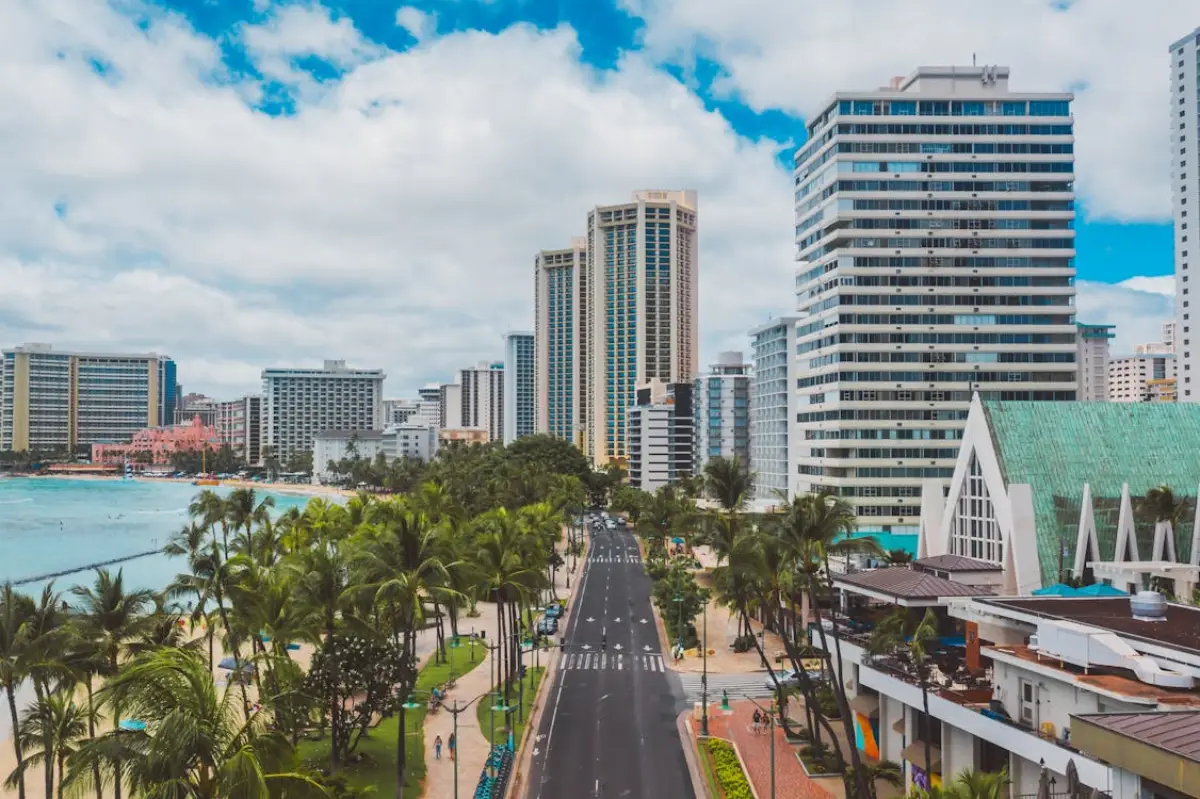
Walk the resort district, use TheBus for Honolulu, choose the trolley for sightseeing, and rent a car only when your Oʻahu plans truly need one.
The short answer
Waikiki is one of the easiest parts of Oʻahu to explore without driving. The main resort district is roughly two miles long, sidewalks connect the major hotel and shopping areas, and several transportation systems serve the neighborhood.
Most visitors can walk between Central Waikiki Beach, Kūhiō Beach, International Market Place, the Royal Hawaiian Center, restaurants, surf schools, and central hotels. TheBus and Waikiki Trolley extend that range toward Ala Moana, Diamond Head, downtown Honolulu, and other visitor areas.
A car becomes valuable for a carefully planned island day, not for moving a few blocks within Waikiki. Parking costs, one-way streets, loading zones, and busy traffic can turn a convenient rental into an unnecessary daily expense.
Choose by trip type
Best for the beach, dining, shopping, parks, and nearby hotels. It is usually faster than driving short distances.
Best defaultUseful for Ala Moana, downtown, and many places beyond the resort district. A HOLO card makes transfers easier.
Best valueClear visitor-oriented loops, recognizable stops, and hop-on, hop-off travel without learning the public bus network.
Easiest introductionWorth considering for multiple distant stops, remote beaches, or trails that do not fit a practical transit route.
Use selectively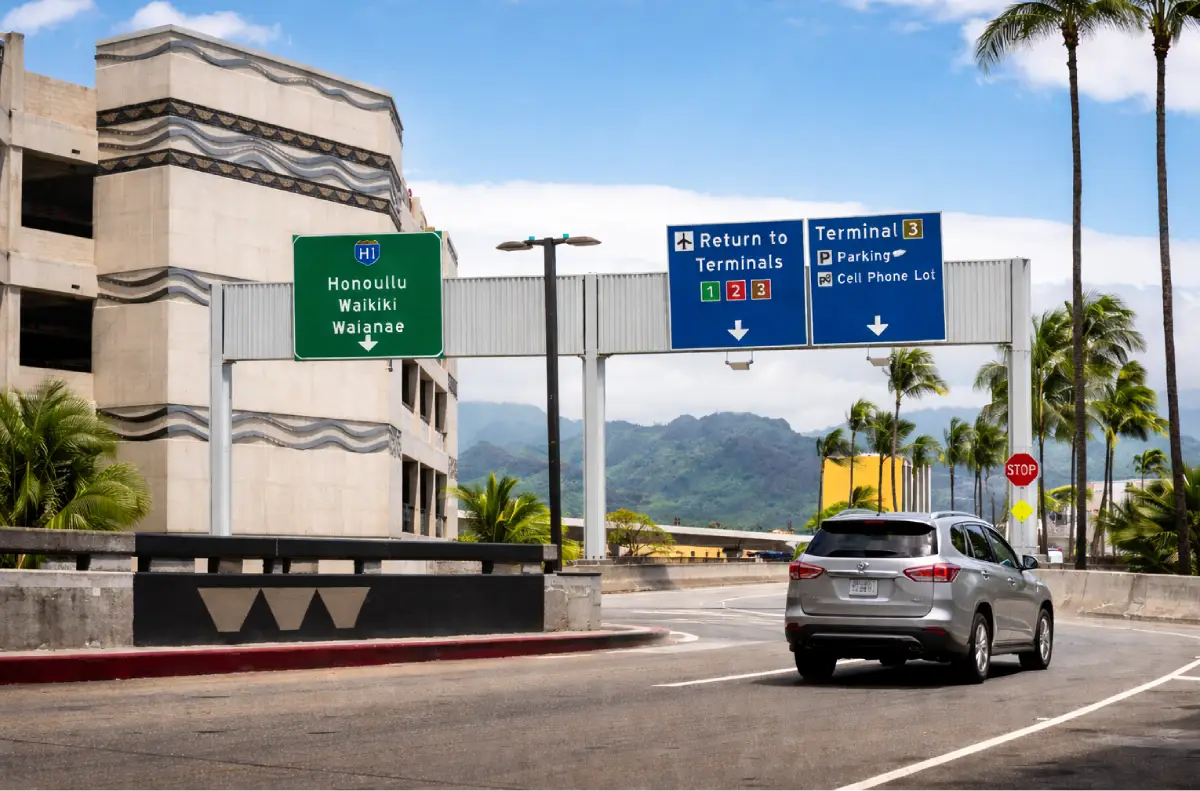
HNL to your hotel
Daniel K. Inouye International Airport is about 9 miles from central Waikiki. Driving time can be around 20 to 30 minutes when traffic moves well, but weekday congestion and terminal pickup delays can extend the trip.
Airport pickup areas and transit connections changed after Skyline service reached HNL in October 2025. Check the official airport transportation page shortly before arrival.
The everyday option
Kalākaua Avenue follows the beachfront and connects many of Waikiki's best-known landmarks. Kūhiō Avenue runs one block inland with frequent bus stops, restaurants, convenience stores, and hotel entrances. Between them, short side streets lead toward the sand or the Ala Wai Canal.
Walking from Fort DeRussy Beach Park toward Kūhiō Beach takes roughly 20 to 30 minutes without long stops. The same walk can easily become half a day when you add breakfast, shopping, swimming, or a sunset pause.

Public transportation
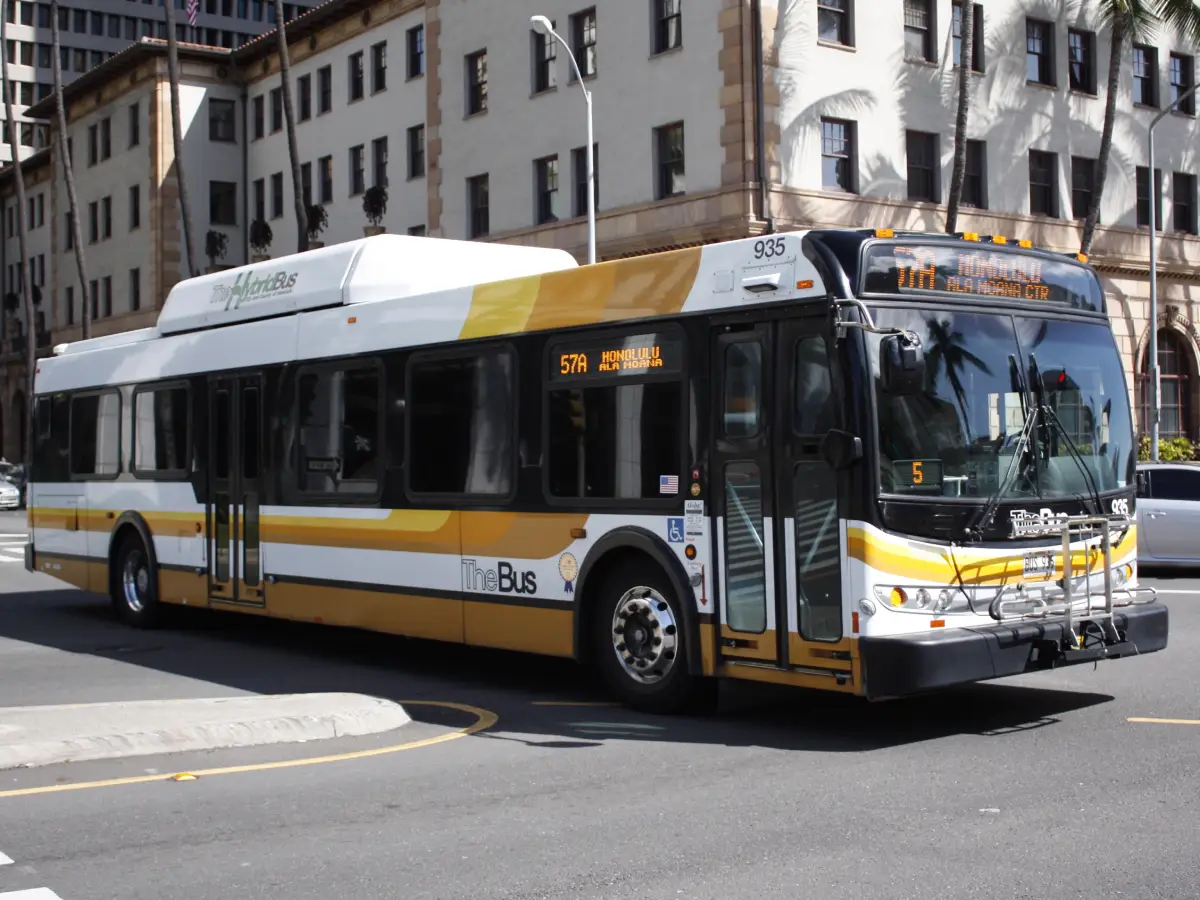
Oʻahu's public bus network connects Waikiki with Ala Moana, downtown Honolulu, major neighborhoods, and many island destinations. Stops are concentrated along Kūhiō Avenue, Ala Moana Boulevard, Kapahulu Avenue, and the edges of the resort district.
A reusable HOLO card is the easiest way to receive transfer time and fare caps. As of July 1, 2026, the adult HOLO fare includes unlimited TheBus and Skyline rides for two hours, with a daily cap after repeated taps. Cash is accepted on buses, but exact fare is required and a cash payment does not include a transfer.
Fares shown were checked on August 4, 2026. Routes, schedules, detours, and fares can change.
Visitor-friendly sightseeing
Waikiki Trolley operates visitor-oriented routes rather than ordinary point-to-point public transit. The current network includes lines focused on ocean views, Diamond Head, historic Honolulu, Ala Moana, and Kakaʻako.
The trolley costs more than TheBus, but the tradeoff is a simpler sightseeing experience. Stops are easy to recognize, route themes make planning intuitive, and hop-on, hop-off access works well for first-time visitors who want several landmarks in one day.
View the official trolley map
Bike share
Biki stations cover Waikiki and central Honolulu. Bike share can work well for Ala Moana, Kakaʻako, and other short urban trips when you are comfortable riding in traffic and using marked bicycle facilities.
City rules prohibit bicycle riding on sidewalks within Waikiki. Use the roadway or designated bicycle facilities, travel with the direction of traffic, obey signals, and walk the bike whenever conditions exceed your comfort level.
Rent with a purpose
Many rental offices operate in or near Waikiki. A short rental avoids paying for an unused vehicle and overnight parking throughout the stay.
Before booking, check the hotel's total parking cost, vehicle return hours, fuel terms, and whether your route requires an advance reservation. Diamond Head and Hanauma Bay, for example, have their own visitor systems.
Orient yourself
Use Kalākaua Avenue for the beachfront, Kūhiō Avenue for many bus stops, and Ala Wai Boulevard for the inland edge of the district.
Walk west for Fort DeRussy and Hilton Lagoon. Continue by bus, Biki, or a longer walk toward Ala Moana Center.
The central shopping and dining core is easiest on foot, with frequent transit along nearby Kūhiō Avenue.
Walk east toward the Duke Kahanamoku Statue, Honolulu Zoo, Waikiki Aquarium, and the park.
Quick answers
Most visitors do not need a car for Waikiki itself. Walking handles many daily trips, while TheBus, trolleys, taxis, ride apps, and Biki cover longer urban journeys. Consider a short rental only for specific island plans.
A taxi, ride app, or reserved shuttle is usually the simplest option with luggage. Public transit can cost less, but service patterns, transfers, and baggage rules make it less convenient for many arriving travelers.
Yes. Waikiki is compact, mostly flat, and served by extensive sidewalks and marked crossings. Heat, rain, crowded corners, and mobility needs can still influence how far a walk feels.
Visitors can pay exact cash on boarding or use a HOLO card. The HOLO system provides time-based transfers and fare caps that cash payments do not include. Check the current official fare page before travel.
No. TheBus is Oʻahu's public transportation network. Waikiki Trolley is a visitor-focused sightseeing service with themed routes and hop-on, hop-off access.
No. Honolulu rules prohibit riding bicycles on Waikiki sidewalks. Use appropriate roadway or bicycle facilities, obey traffic signals, and walk the bike when you are not comfortable riding safely.
Only if you need the vehicle immediately. If the first part of your stay is centered on Waikiki, renting later in the neighborhood can reduce parking costs and avoid keeping an unused car.
The original Waikiki.info post has been retained and expanded. Transportation details were checked on August 4, 2026 against the official Daniel K. Inouye International Airport, TheBus fare guide effective July 1, 2026, HOLO, Waikiki Trolley map, Biki, and the City and County of Honolulu bicycle rules. Schedules, fares, stops, pickup zones, and parking terms can change.