Grand Hall
A sweeping koa staircase and royal portraits establish the palace's ceremonial scale and family history.
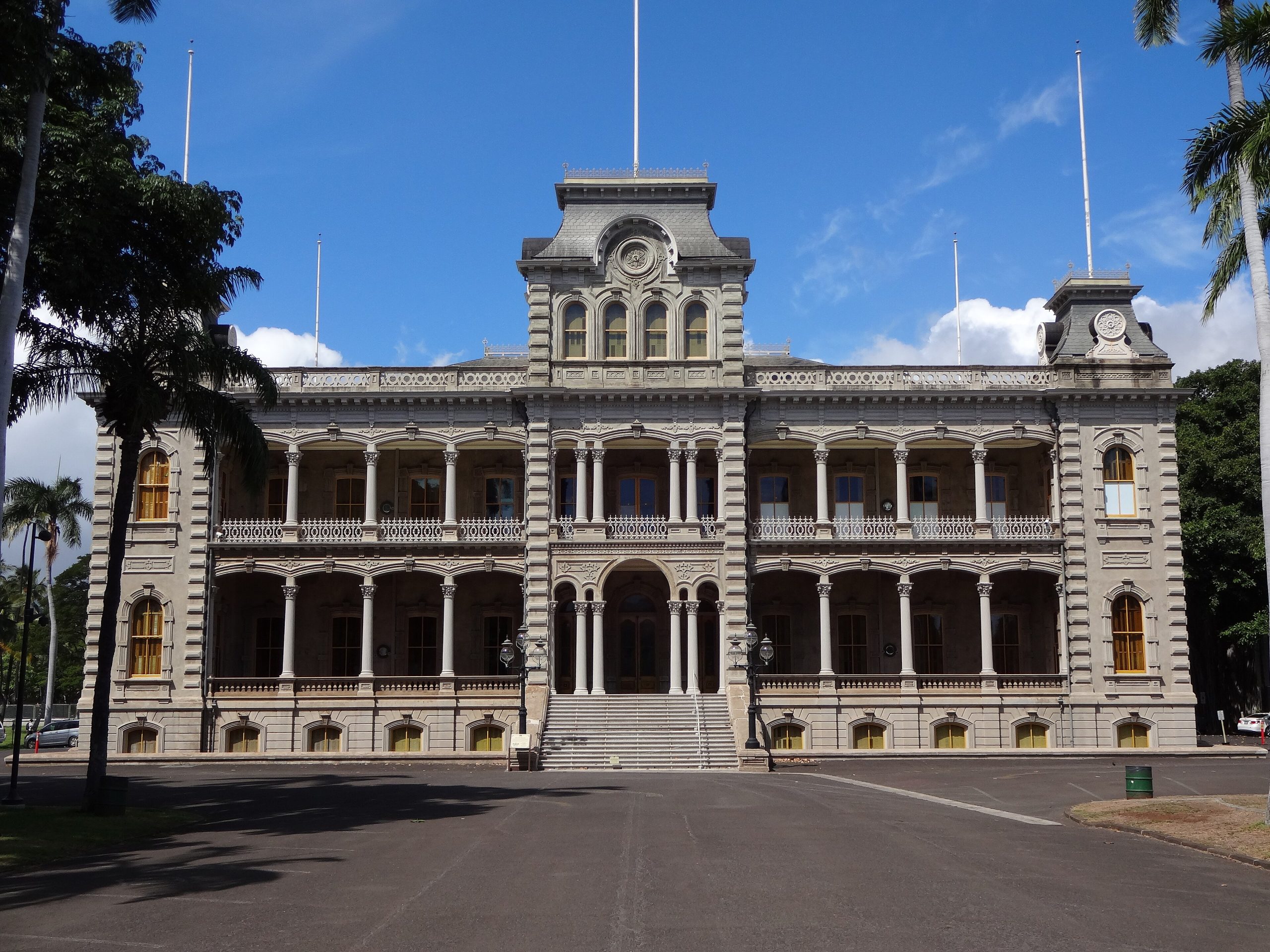
Walk through restored state rooms, royal suites, and the place where the Hawaiian Kingdom's final political chapters unfolded.
Begin with respect and context
ʻIolani Palace is the most important place in Honolulu for understanding the Hawaiian monarchy as a modern, internationally connected government rather than a distant symbol.
King Kalākaua completed the present palace in 1882 as an official royal residence and center of political life. Its restored rooms reveal ceremony, music, diplomacy, technology, family life, and the ambitions of a sovereign Hawaiian Kingdom.
The visit also carries a more difficult history. Queen Liliʻuokalani was tried in the Throne Room and later imprisoned upstairs after the overthrow of her government. Move through the palace as a place of living memory, not simply an ornate historic house.
Choose a tour before you go
Standard visits include the first-floor state rooms and second-floor private suites. The self-led audio tour offers flexibility, while the docent-led tour adds a live guide and discussion.
First-visit priorities
The rooms are beautiful, but their meaning comes from the people, ceremonies, decisions, and losses connected to them.
A sweeping koa staircase and royal portraits establish the palace's ceremonial scale and family history.
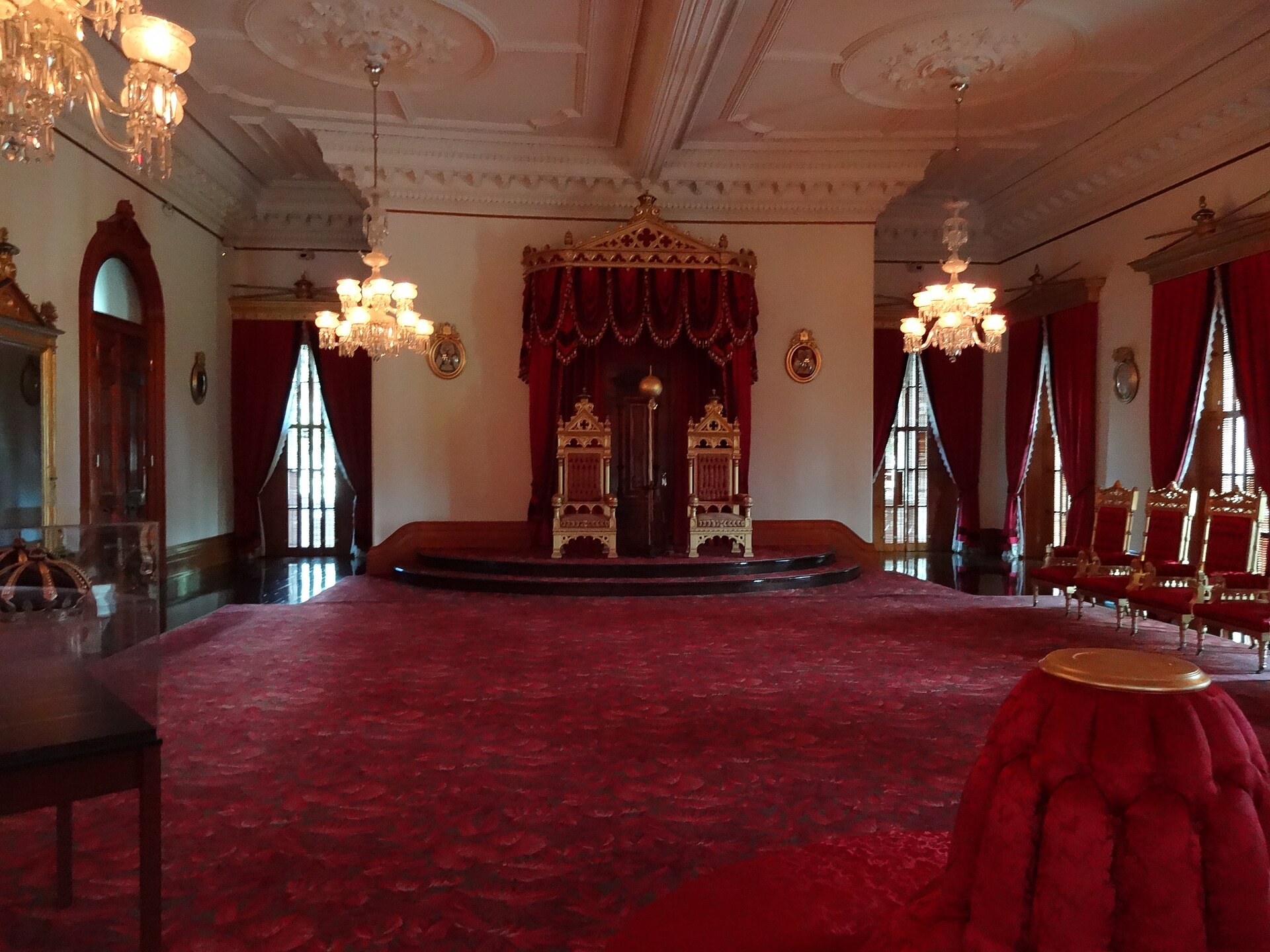
The crimson room hosted formal audiences and royal events, then later Queen Liliʻuokalani's military trial.
An intimate reception room links portraits, furnishings, and the social life of the Kalākaua dynasty.
Carved doors, crystal, porcelain, and formal settings show how the monarchy welcomed guests and dignitaries.
The bedrooms, library, and Music Room reveal personal interests behind the public roles of Hawaiʻi's monarchs.
The sparse upstairs room confronts visitors with Queen Liliʻuokalani's confinement after the overthrow.
The ceremonial center
The Throne Room concentrates the palace's beauty and political complexity. King Kalākaua held state balls, diplomatic receptions, and formal audiences here. After the monarchy's overthrow, the room became the setting for Queen Liliʻuokalani's trial.
Three rooms, three perspectives
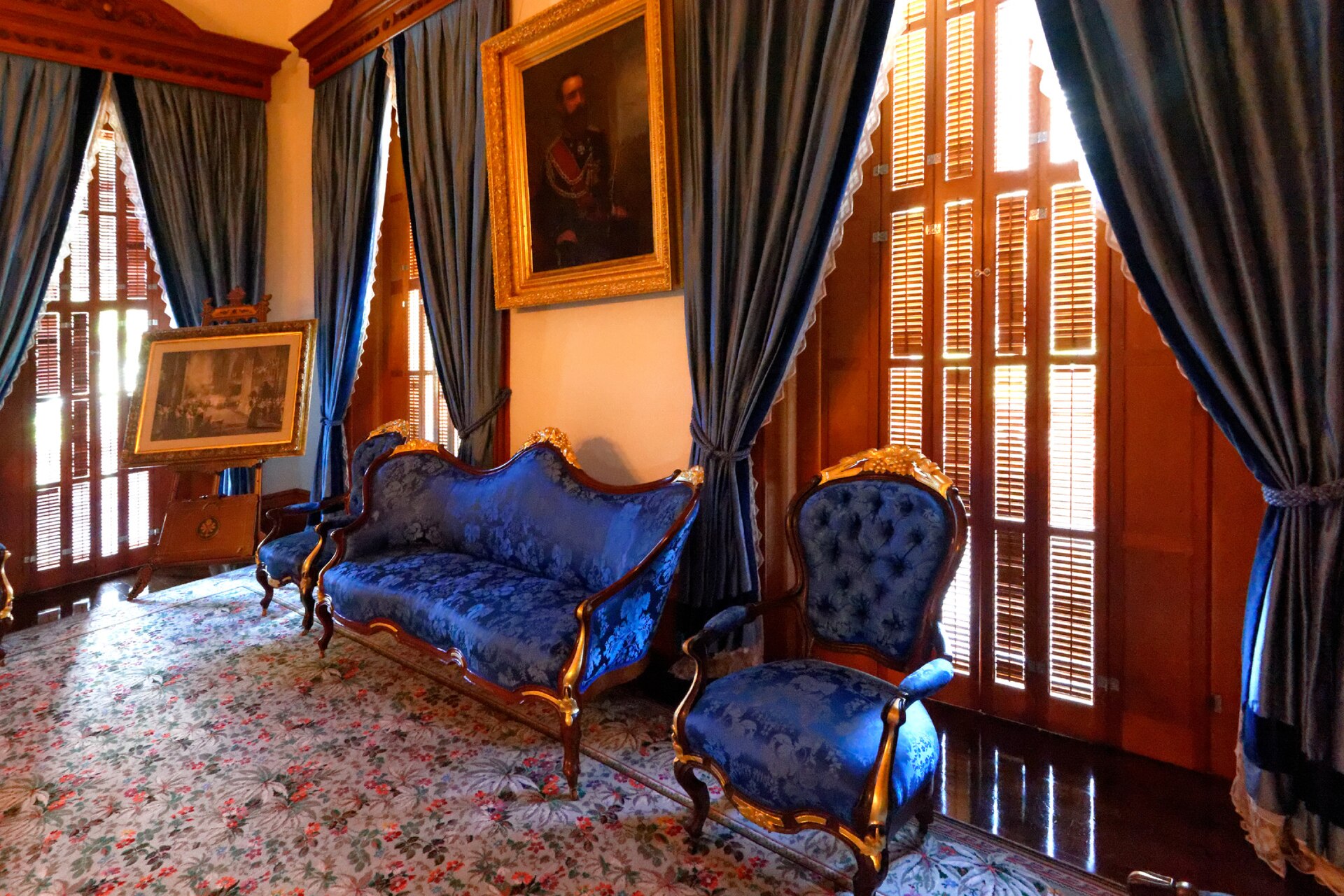
A more intimate state room where royal portraits and restored furnishings bring the court's social world closer.
The palace's largest room carries both the brilliance of royal occasions and the gravity of the Queen's trial.
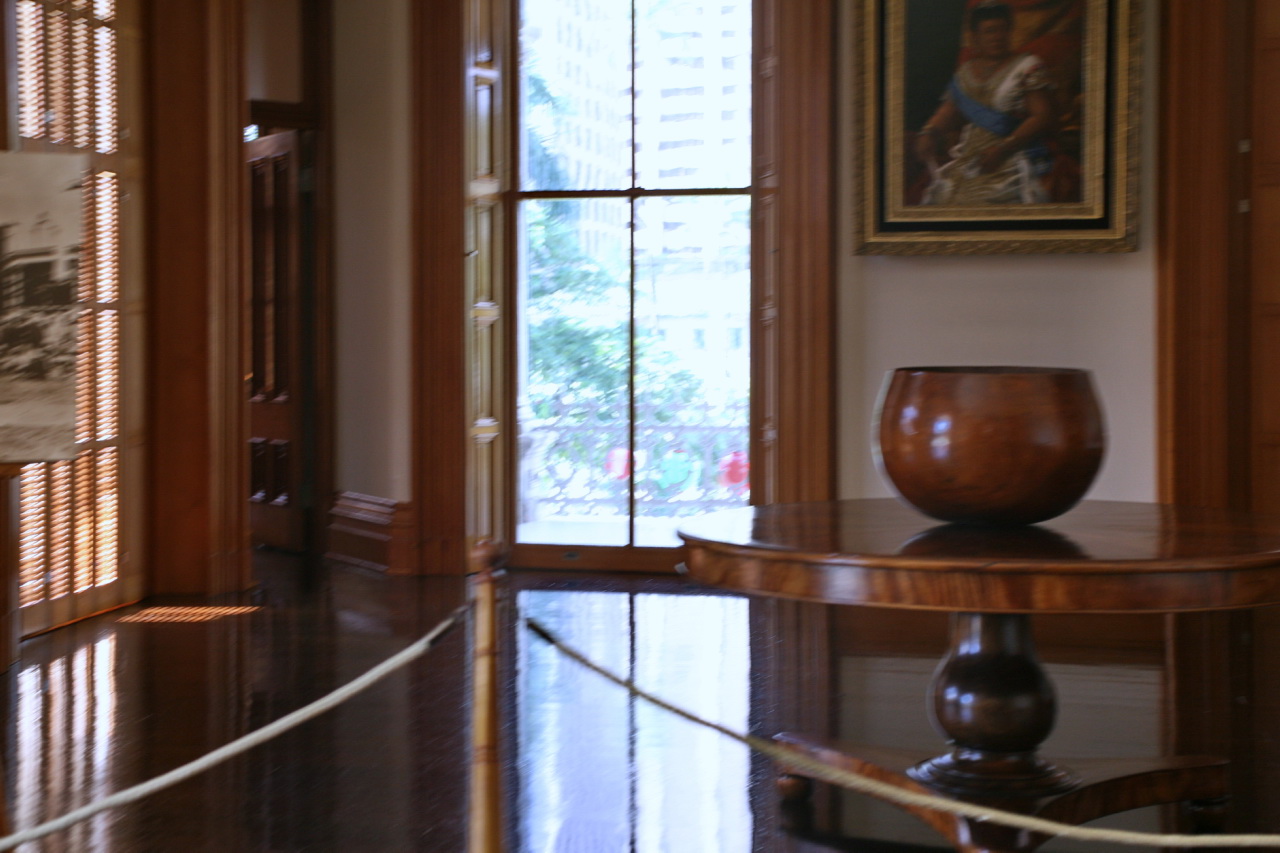
A restrained space with a powerful story about sovereignty, resistance, loss, and the Queen's endurance.
A thoughtful 90-minute visit
Arrive early enough to check in without rushing. The standard tour itself needs about an hour, while the grounds and nearby civic landmarks can extend the visit.
Collect or confirm your ticket, store prohibited items elsewhere, and be ready for the required shoe coverings.
Follow the first and second floors while connecting furnishings and architecture to the people who lived and governed here.
See the Barracks, Coronation Pavilion, and palace exterior, then continue toward the State Capitol or Kawaiahaʻo Church.
Practical visitor guide
Exact location
364 South King Street, Honolulu, HI 96813, at King and Richards Streets in downtown Honolulu.
The palace is in downtown Honolulu, roughly three miles from central Waikiki. Allow extra time during commuter traffic.
Bus routes connect Waikiki with downtown, while rideshare avoids limited parking and makes a one-way city itinerary simple.
The palace currently lists grounds parking at $4 for two hours. Prepay enough time and have a nearby garage backup.
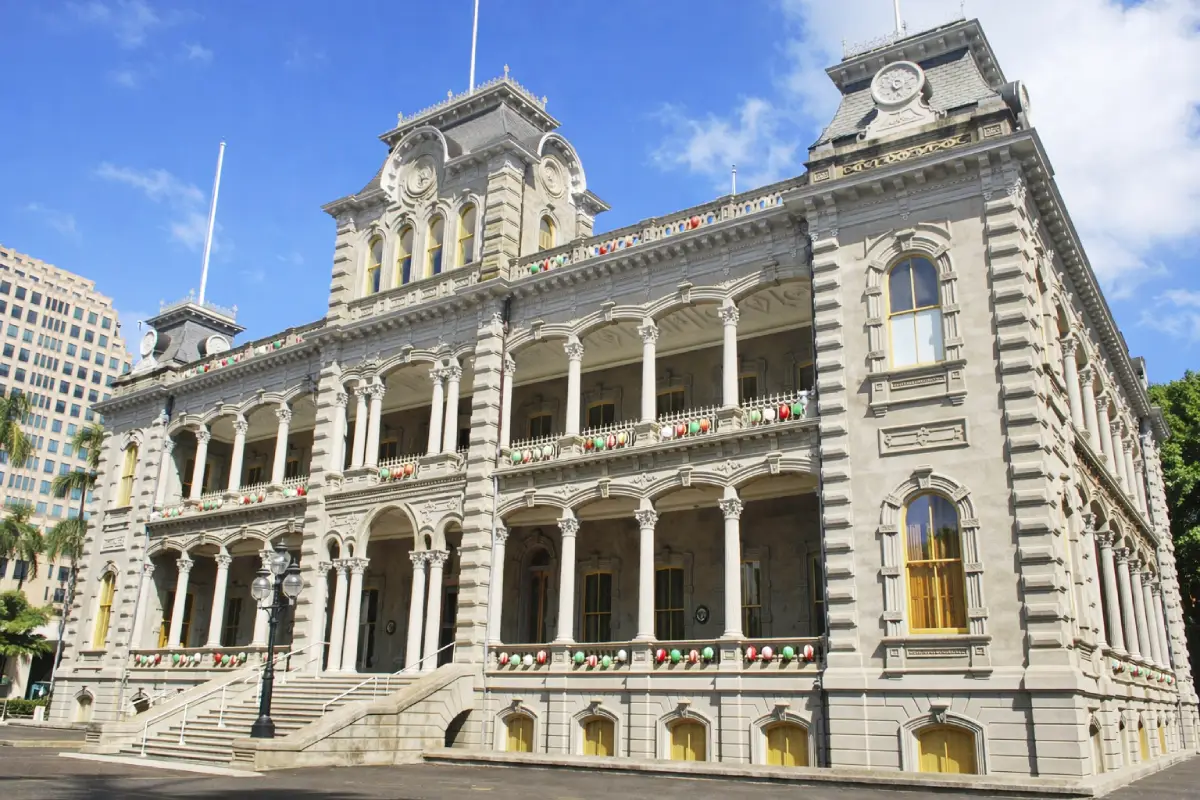
Royal residence, government seat, restored landmark
King Kalākaua built the present ʻIolani Palace in 1882 as the official residence of the Hawaiian monarchy and an expression of Hawaiʻi's place among modern nations.
After the monarchy's overthrow in 1893, the palace served successive governments and later the territorial and state capitol until 1969. A major restoration returned the building to its monarchy-era appearance, and it opened as a museum in 1978. Today the palace is a National Historic Landmark and a living restoration of Hawaiian national identity.
Quick answers
Yes. It is essential for visitors who want to understand the Hawaiian Kingdom, King Kalākaua, Queen Liliʻuokalani, and the political history behind modern Hawaiʻi.
Allow 60 to 90 minutes for the standard tour, plus time for check-in, the grounds, the Palace Shop, and nearby downtown landmarks.
Yes. The official tour pages currently require reservations and online ticket purchase. Availability and tour types vary by day, so choose a time before traveling downtown.
The audio tour suits visitors who prefer a flexible pace and multiple language options. The docent tour suits visitors who want live interpretation, questions, and a more guided narrative.
Personal photography is allowed without flash. Video, audio recording, tripods, monopods, selfie sticks, and extended lenses are not permitted.
The palace normally provides accessibility information and allows service animals, but the official site currently reports that the wheelchair lift is temporarily out of service. Contact the palace before booking if step-free access is required.
Visitor details were checked against the official hours page, tours and admission guide, directions and parking page, palace room guide, and Queen's imprisonment history. Photo licenses and attribution details are included in the source package.