Kalākaua bridge
Begin near the Hawaiʻi Convention Center, where the canal opens toward the harbor and western Waikīkī.
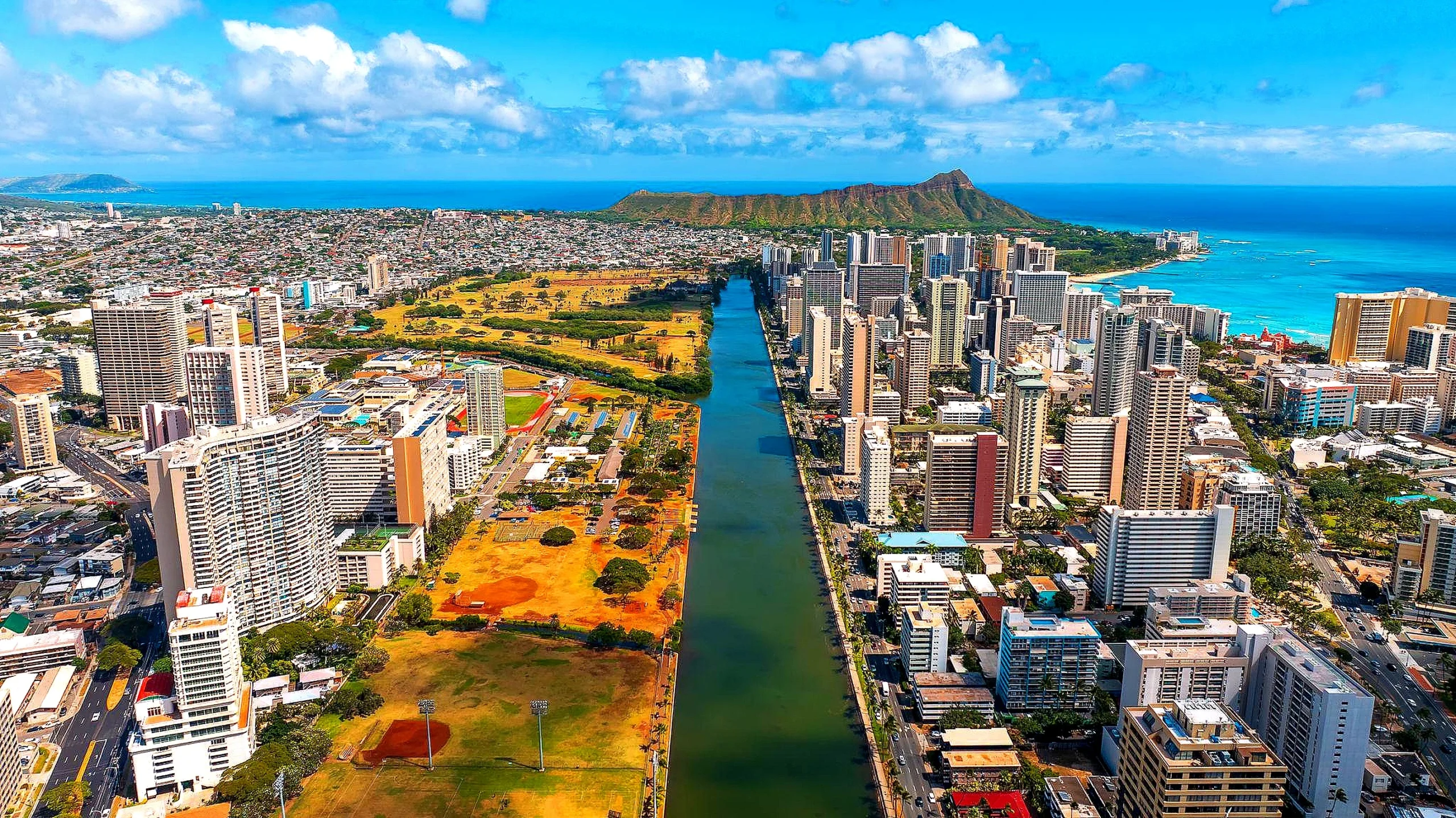
Walk beside calm reflections, paddling crews, mountain views, and the waterway that helped shape modern Waikīkī.
An everyday side of the resort district
The Ala Wai Canal forms the inland edge of Waikīkī, creating a long strip of open sky and water only a few blocks from the neighborhood's busiest beach streets.
This is not a polished attraction with gates, exhibits, or a single entrance. It is a working urban waterway bordered by sidewalks, a promenade, bridges, parks, apartments, and streets. Local residents use the canal corridor for morning runs, dog walks, cycling, fishing, and paddling practice.
For visitors, its appeal is contrast. The route replaces storefronts and hotel lobbies with mountain clouds, reflected towers, banyan shade, canoe crews, and everyday Honolulu life. A short walk works well before breakfast, after a beach day, or as a quieter connection between Waikīkī and the Hawaiʻi Convention Center.
A simple route with no fixed schedule
Start near the Kalākaua Avenue bridge, follow the promenade toward McCully Street, cross the canal, and return along the Waikīkī side. Extend or shorten the walk at any bridge.
Six useful route markers
The canal is easy to explore without covering its full length. Use the bridges as natural decision points.
Begin near the Hawaiʻi Convention Center, where the canal opens toward the harbor and western Waikīkī.
The north-bank path adds trees, benches, and a calmer walking environment away from Ala Wai Boulevard traffic.
Cross here for a compact loop or continue inland for a longer route beside community parks and sports areas.
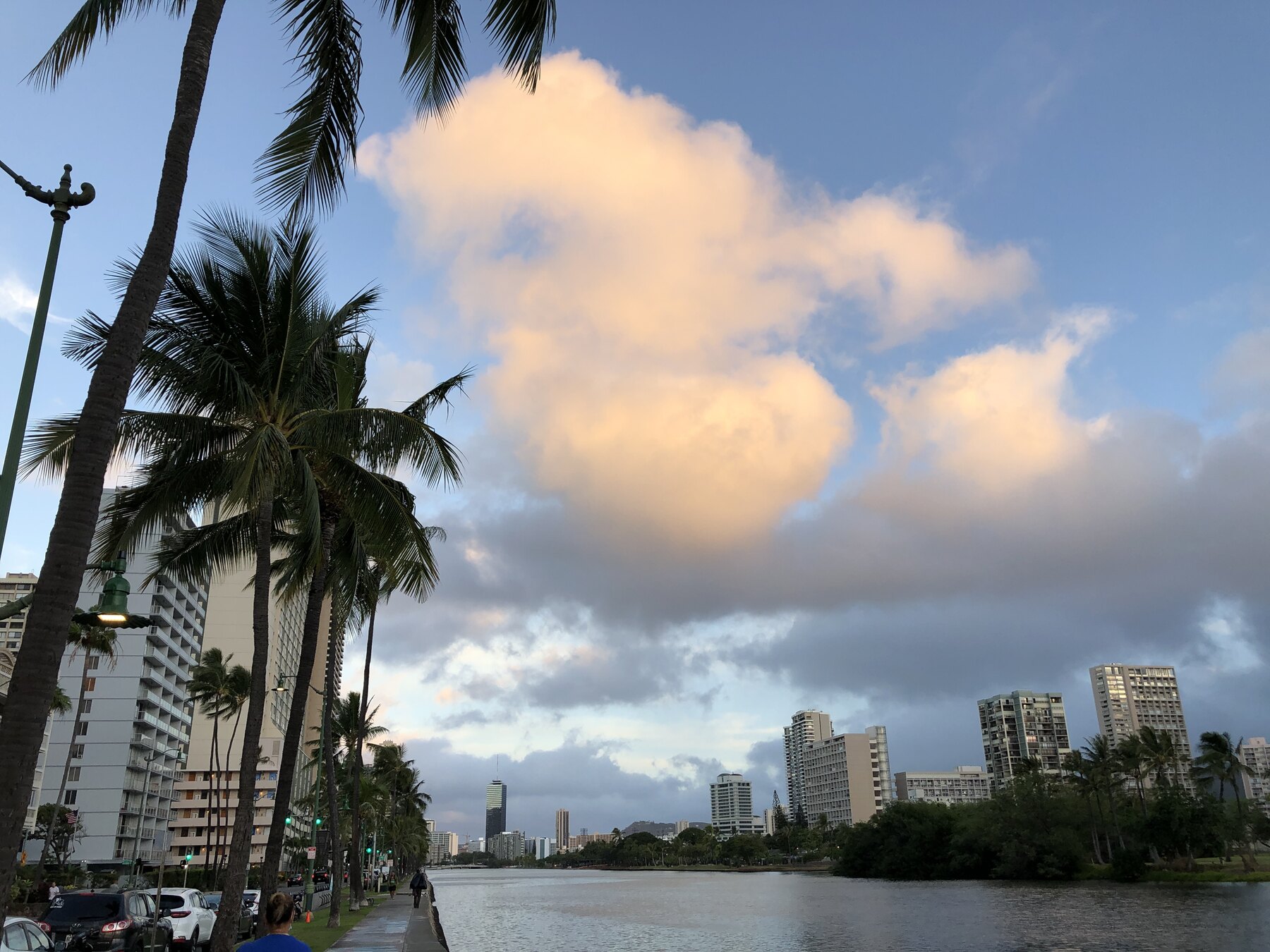
Walk back with resort towers on one side and the Koʻolau foothills and passing clouds reflected in the water.
Outrigger and dragon boat crews often train here, adding movement and a strong local rhythm to the canal scene.
Finish at Kalākaua Avenue or continue toward Ala Wai Harbor for masts, open sky, and a link to Ala Moana.
The best time is before the heat
Early morning is the most rewarding time to walk. The air is cooler, traffic is lighter, the water often holds clearer reflections, and runners and paddlers bring the corridor to life.
Three views of the canal corridor
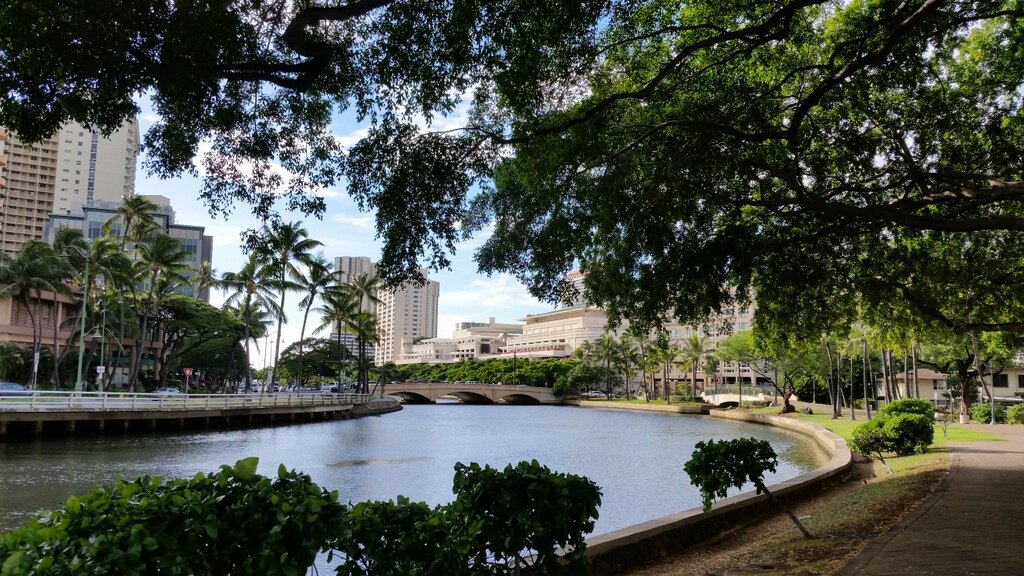
Trees, benches, and a separated path create the most park-like portion of the canal walk near the convention center.
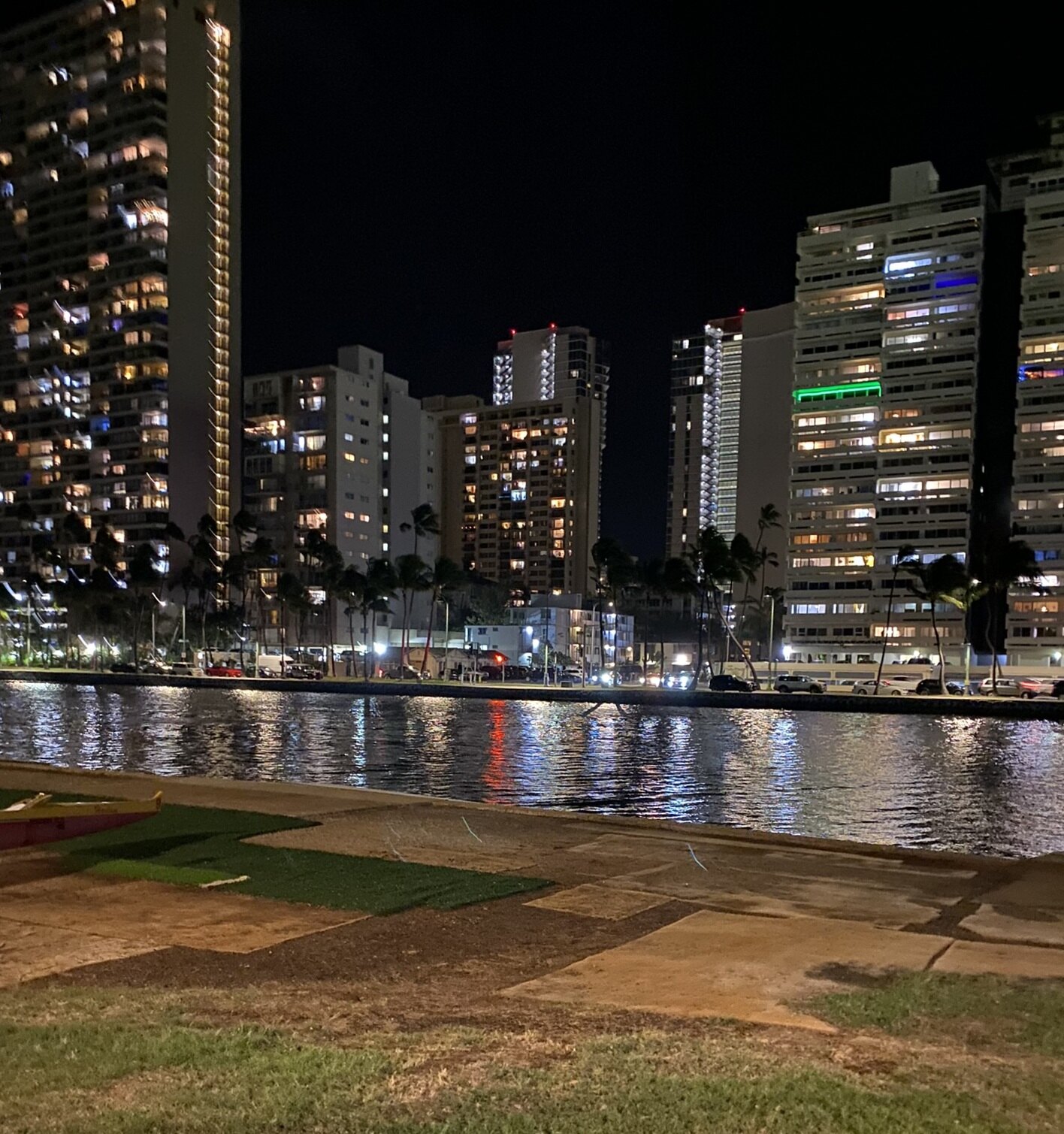
The water mirrors hotel and apartment lights, showing the urban side of Waikīkī away from the beachfront.
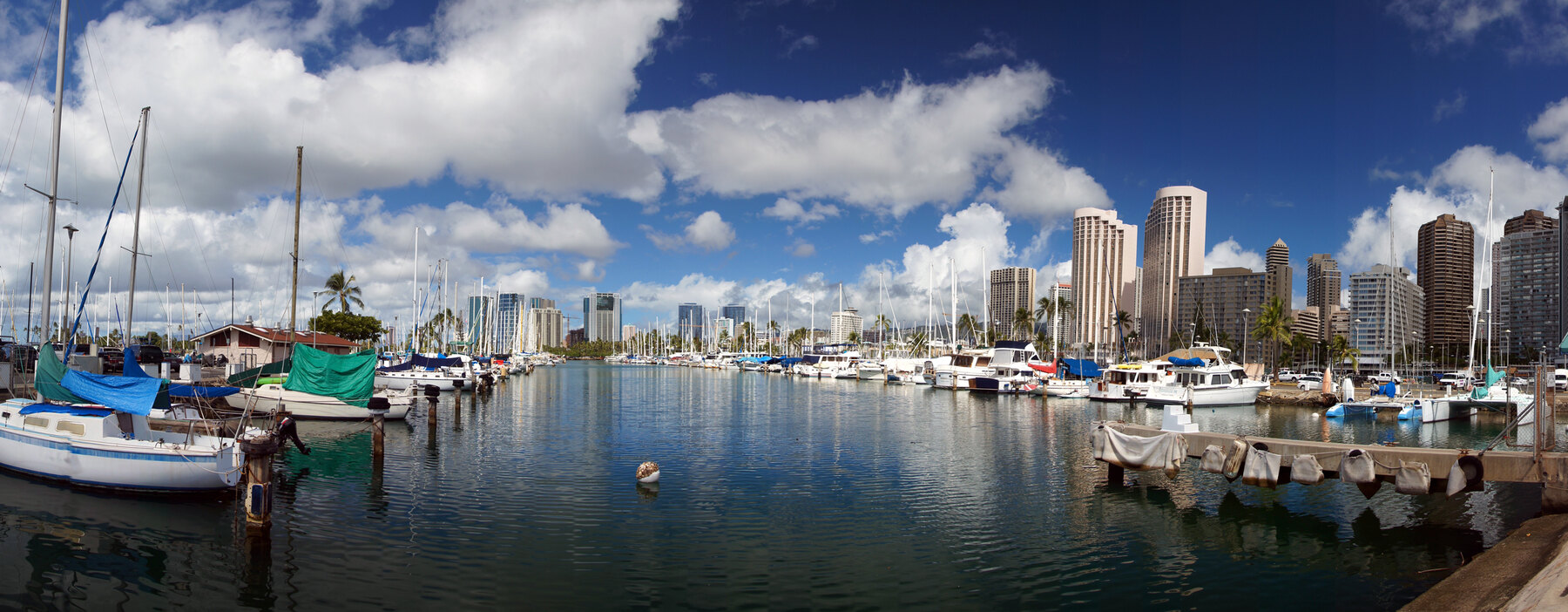
At the western outlet, working canal infrastructure gives way to sailboats, yacht clubs, and the open Pacific.
Three easy ways to fit it into a trip
The canal works best as part of a Waikīkī day rather than a separate half-day attraction.
Start near your hotel, follow the water for 20 to 40 minutes, then return through central Waikīkī as cafés begin opening.
Use the canal as a scenic alternative when walking between Waikīkī, the convention center, and the edge of Ala Moana.
Choose a familiar, well-used section, enjoy the changing light, and return to the busier streets before late evening.
Practical visitor guide
Suggested walking start
Begin near the Kalākaua Avenue bridge beside the Hawaiʻi Convention Center, then follow the canal toward McCully Street.
Most hotels are 5 to 15 minutes from the canal. Use Seaside, Lewers, or another familiar cross street to reach Ala Wai Boulevard.
Walk toward the convention center and Kalākaua bridge, where the canal and promenade become easy to identify.
Street spaces are limited and traffic is busy. Walk from Waikīkī or combine the route with bus or rideshare travel.
The waterway that transformed Waikīkī
Before the canal, much of inland Waikīkī was a wetland landscape of streams, springs, fishponds, taro fields, and later rice cultivation. The water system supported Native Hawaiian life but was increasingly seen by territorial planners and developers as a barrier to urban growth.
Hawaiian Dredging Construction Company began the Ala Wai Canal in 1921 and completed it in 1928. The project redirected drainage, dried large wetland areas, and produced dredged material that helped raise building sites. It made intensive resort and residential development possible while permanently changing the ecology and cultural landscape of Waikīkī.
Today the state-maintained canal remains a major drainage corridor. Storm runoff carries natural material and urban trash downstream, which is why cleanup, debris traps, water-quality work, and flood-risk planning remain part of its story.
Quick answers
Yes, if you want a quiet urban walk, sunrise reflections, paddling activity, or a local perspective away from the beachfront. It works best as a short addition to a Waikīkī day.
Sidewalks and paths follow much of the canal, but the experience changes by bank and section. Most visitors will enjoy a shorter loop between the Kalākaua Avenue and McCully Street bridges rather than trying to cover every segment.
No. Visitors should not swim or wade in the canal. It receives stormwater and stream runoff, and health agencies warn against entering canals and other freshwater bodies, especially when water is brown, murky, or carrying debris.
Sunrise and the first hours of morning offer cooler temperatures, calmer reflections, and more local activity. Early evening can also be pleasant, but use familiar, well-used sections and finish before late night.
Many sections are flat and paved, but families must manage road crossings, cyclists, runners, uneven surfaces, and unprotected water edges. Keep young children close and never let them approach the canal wall alone.
The Kalākaua Avenue bridge beside the Hawaiʻi Convention Center is a practical start. It connects Waikīkī with the tree-lined Ala Wai Promenade and creates an easy loop using McCully Street.
Canal history and visitor-safety context were checked against the U.S. Army Corps of Engineers Ala Wai project history and Hawaiʻi Department of Land and Natural Resources information on storm debris and water safety and the March 2026 cleanup. Conditions and temporary path access can change. Photo licenses are documented in the source package.